
Iran’s New Supreme Leader Issues First Wartime Statement
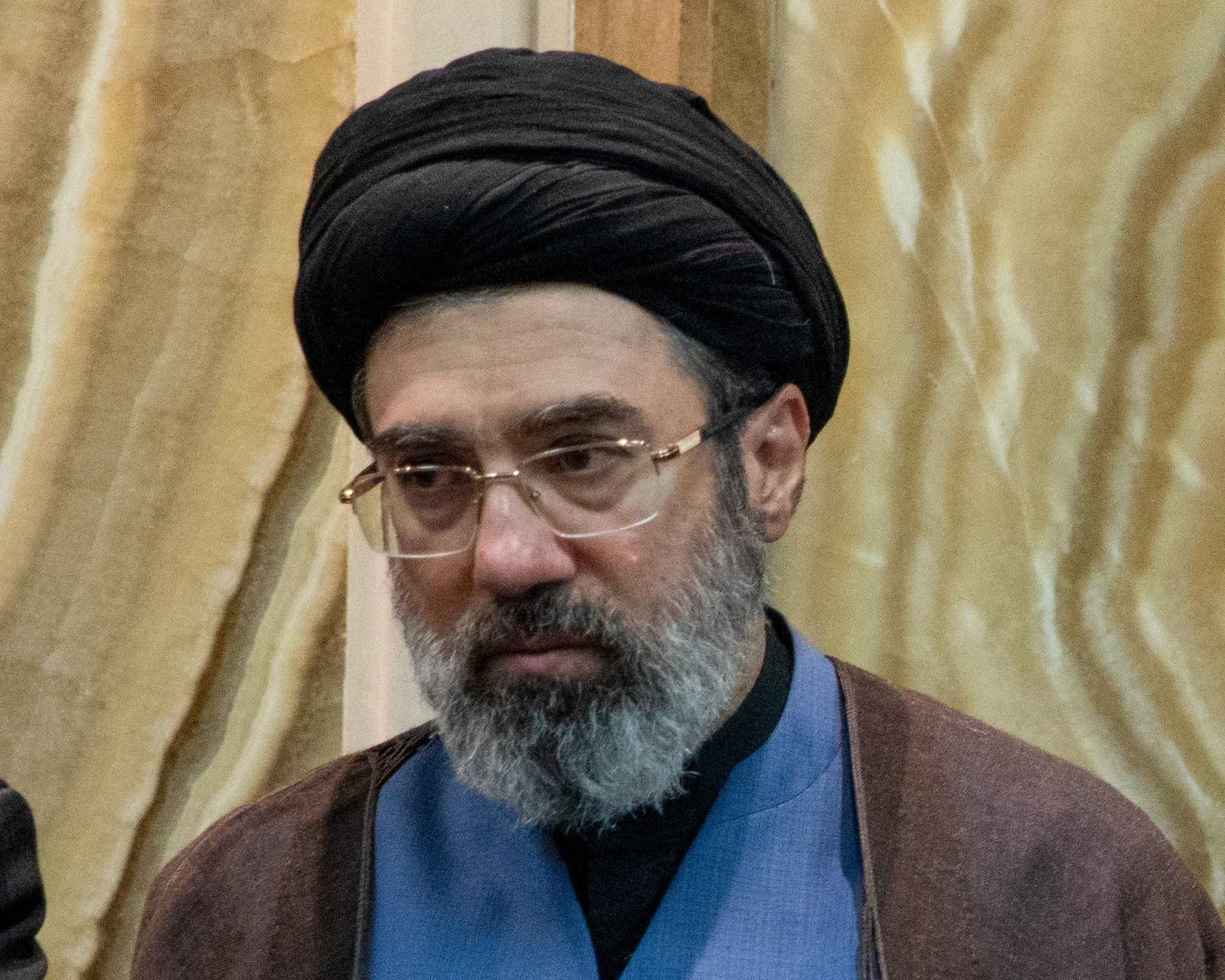
Iran’s new supreme leader, Mojtaba Khamenei, released his first public statement after taking power following the death of his father, Ali Khamenei, who led the country for more than three decades. The leadership transition marks an important moment for the Islamic Republic of Iran, as the position of supreme leader holds the highest authority over the country’s political system, military forces, and major national decisions. In his message, Mojtaba Khamenei called for unity among Iranians and urged the nation to remain strong during a time of rising geopolitical tension in the Middle East. He emphasized that Iran would continue to defend its sovereignty and national interests despite pressure from the United States and several Western allies.
In the statement, the new leader also warned countries that support American military operations in the region, suggesting that Iran could respond if it believes its security is threatened. He praised the country’s armed forces and security institutions for protecting Iran and maintaining stability during the leadership transition. According to analysts, this early message reflects a continuation of Iran’s long-standing strategic posture in regional politics. The statement also highlighted the importance of the Strait of Hormuz, one of the world’s most critical oil transit routes. A large percentage of global oil shipments pass through this narrow waterway each day, making it a key point of concern for energy markets and international governments whenever tensions rise in the Gulf region.
Observers around the world continue to watch closely as Mojtaba Khamenei begins his leadership. Some reports note that he has not yet appeared publicly since the announcement of his appointment, which has led to speculation among political analysts about his current role and visibility within Iran’s leadership structure. Meanwhile, governments in the United States, Israel, and several European countries have reacted cautiously to the statement and continue to monitor developments in Iran. Energy markets have also shown sensitivity to the situation because instability around the Strait of Hormuz could affect global oil supply and international trade.
Experts say the coming months will be important in determining how the new supreme leader shapes Iran’s domestic and foreign policies. His first message signals a desire to project strength and continuity while reassuring supporters inside the country. At the same time, the international community remains attentive to Iran’s actions as regional tensions remain high. As Mojtaba Khamenei settles into his new role, many analysts believe his leadership decisions could influence not only Iran’s political future but also the broader balance of power in the Middle East.